Who’s behind Consultatika
Hi, I’m Aleksandar Popov, founder of Consultatika.
Business process optimization and operation efficiency | AI and Automation consultant – I help SMEs improve operations by identifying bottlenecks, reducing manual work, and applying targeted AI and automation where it creates real business value.
With 20+ years of professional IT experience and formal education in Economics, with a focus on Business Information Systems, I combine technical expertise with a business-first mindset. This dual perspective helps ensure that every recommendation is practical, strategic, and grounded in your day-to-day operations.
Throughout my career, I have specialized in managing complex project delivery and client operations for global enterprises. Operating at the intersection of strategy and execution, I have overseen high-stakes engagements for industry leaders such as Hewlett Packard, IVC Evidensia, AEG Presents, MOL, and Turkish Airlines, and I now bring that enterprise-level operational discipline to scaling SMEs.
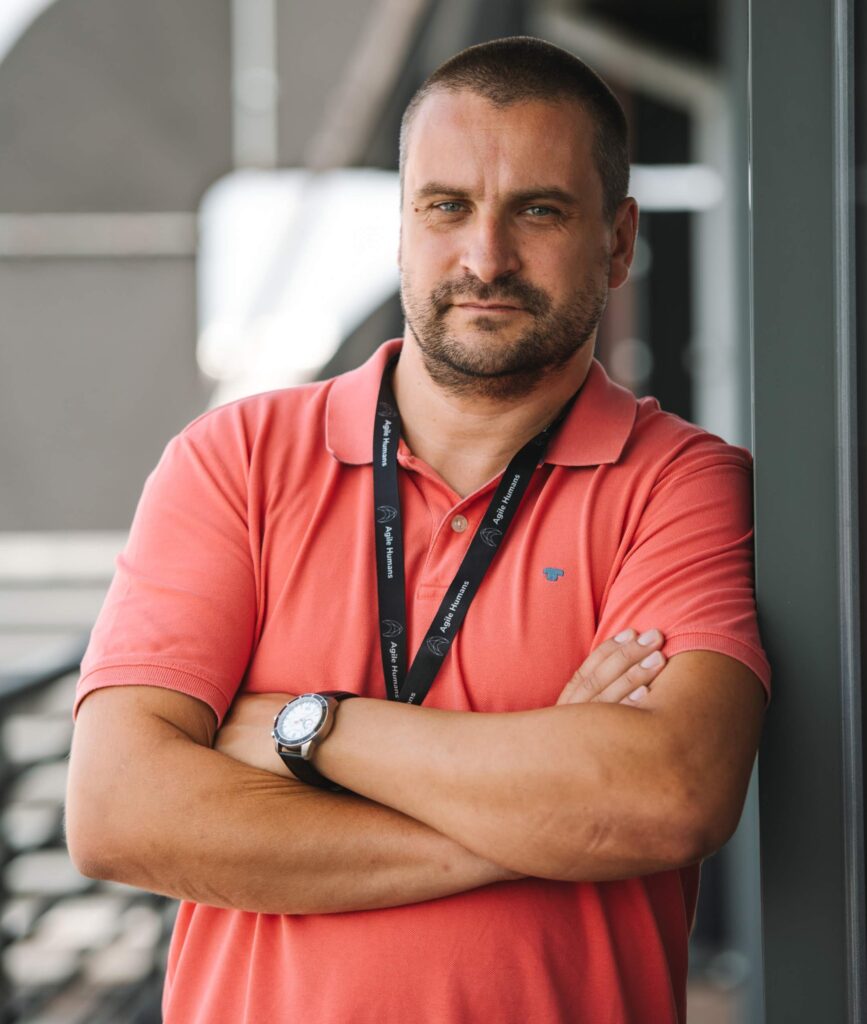
I work primarily as an independent consultant, which keeps engagements focused and direct.
When a project requires broader capabilities or deeper specialization, I collaborate with a trusted network of partners to bring in the right expertise without unnecessary overhead.
How we actually work
The methods we use are familiar to anyone who has worked in enterprise consulting: MECE problem decomposition, end-to-end workflow mapping, and analysis across five operational dimensions. What’s different is the context. Instead of a 6-week engagement with a partner, two managers, and three analysts, you work directly with one experienced consultant. Same analytical discipline, scaled to what an SME can actually consume.
What your daily operations actually reveal
Most business surveys ask “how good are your processes?” – and unsurprisingly, everyone says “pretty good.” Our diagnostic doesn’t ask for self-grades. It asks about observable day-to-day patterns – the kinds of things that surface where work is actually slowing down, where the same data is moving through too many places, and where the business depends on one person to keep running. From those answers the real picture emerges, not the company’s self-perception of it.
How we calculate the cost of inaction
The estimated cost range in your report isn’t pulled from thin air. It uses four specific inputs from your diagnostic answers:
- Hours per week your team spends on manual rework, re-entry, or workarounds
- Your company size
- Your operational readiness score (from the diagnostic itself)
- Regional labor cost benchmarks for your country
An efficiency-drag factor is then applied to account for broader business cost beyond the manual hours alone. The result is an estimate, not an accounting figure. It tells you the order of magnitude of where the leak likely sits, so you can compare it against the cost of fixing it.
Weeks, not months. Hundreds, not tens of thousands.
Traditional consulting costs €5,000 to €30,000 and takes 6+ weeks. For most SMEs that’s too much on both fronts – the money isn’t there, and the time isn’t there either. I’ve structured Consultatika to compress delivery into days, and prices into a range an SME can actually consume:
- Tier 1 – Discovery (free): A 5-minute self-assessment that returns a personalized PDF report showing where time and margin are leaking. No call, no commitment.
- Tier 2 – Operating Diagnostic (one-time fee): A detailed report with prioritized actions for the next 30-45 days, followed by a working session (up to 1 hour) to walk through findings together.
Everything is structured so you can review findings and action steps between meetings. No padded slide decks. No “phase 2 of the discovery alignment workshop.” Just what you need to make decisions and move.
Who Consultatika works best for
Consultatika works best with SMEs that:
- want clearer visibility into where operations are slowing down
- need focused improvements that create measurable operational value
- rely on manual workarounds across Excel, email, and disconnected systems
- are exploring AI and automation, but are not sure where to start
- already tried implementing ad hoc and unstructured AI and automation projects, using improvised resources and tools, without strategic and methodical approach
If your business is losing time to manual work, disconnected systems, or unclear processes – or if you are exploring AI and automation but are not sure where to start – let’s explore the right next step together.
You can also connect with me on LinkedIn here.
Frequently Asked Questions
Who We Help & Our Approach
Is this for us?
This is for SMEs in manufacturing, logistics, and professional services (typically 10 to 250 employees). If you already know that you need to automate workflows and introduce AI to stay competitive, but you simply do not know how or where to start, you are in the right place. We help companies currently running on a tangled mix of CRMs, ERPs, spreadsheets, and manual workarounds build a clear, practical roadmap before they make expensive, unguided tech investments.
We are not sure if AI is the right answer for us. Is that a problem?
Not at all. In fact, jumping straight to AI is often a mistake. We first focus on diagnosing disconnected systems, manual workarounds, and reporting gaps. Sometimes the best solution is simple automation or connecting existing tools. AI is only recommended when it clearly drives growth and efficiency.
Which industries and company sizes do you work with?
We specialize in SMEs with 10 to 250 employees. Our deepest expertise lies in manufacturing, logistics, and professional services—industries where operational clarity and workflow efficiency can dramatically improve margins.
Do you implement the solutions yourselves or just consult and advise?
We provide the strategic roadmap and independent advisory. Depending on the complexity of the project, we offer optional help with strategy and implementation, acting as your guide to ensure technical execution matches business goals. And yes, by agreement, we can do the implementation as well.
How We Work (The Engagement Tiers)
What is the free Tier 1 – Discovery?
It is a fast, completely frictionless starting point. You simply complete our targeted 14-question inquiry about your current operations, and we provide a high-level report identifying your likely bottlenecks and potential areas for improvement.
Is there a call included in the Tier 1 – Discovery?
No, there is no call required for Tier 1. It is designed to respect your time. You simply fill out the 14-question inquiry on your own schedule, and we deliver your custom Discovery report based on your answers.
How fast do I get the Tier 1 – Discovery report?
You will receive your written summary of likely bottlenecks and top opportunity areas shortly after you submit your 14-question inquiry.
Is the Tier 1 – Discovery really free, with no commitment?
Yes, completely free. The goal of Tier 1 is to provide you with initial clarity and to determine if we are a good fit for your operational challenges without requiring any commitment from you.
What does the Tier 2 – Diagnostic actually look like?
Unlike the free Discovery, the Tier 2 Diagnostic is a paid, deep-dive assessment. It starts with you completing a more comprehensive online inquiry form. Once submitted and payment is processed, our experts analyze your specific workflows. Within 5-7 days, you will receive your detailed Diagnostic Report and a link to schedule a dedicated debrief call to walk through the findings together.
What does the Tier 2 – Diagnostic include?
It includes our deep-dive online diagnostic form, an expert analysis of your existing software stack and processes, and a formal Diagnostic Report delivered within 5-7 days. It concludes with an in-depth debrief call with our experts to discuss the strategy and outline your practical roadmap.
Will the Tier 2 – Diagnostic report recommend specific tools or just general direction?
Both. While the primary focus is establishing a strong strategic direction, we will highlight specific classes of tools or integrations (e.g., specific automation platforms or AI tools) that fit your unique workflows, budget, and business size.
Do I get the Tier 2 – Diagnostic report even if I do not continue with Consultatika?
Yes, absolutely. The Tier 2 Diagnostic is a standalone, highly valuable deliverable. You own the roadmap. You can implement the recommendations internally, take the plan to an existing vendor, or continue with us into a Tier 3 engagement.
What does Tier 3 – Strategic engagement include?
Tier 3 is a fully tailored engagement based entirely on what we agree upon and outline in a signed contract. It involves us actively guiding your team through the implementation of the roadmap developed in Tier 2, ensuring alignment and reducing execution risk.
Do I have to complete Tier 2 before starting Tier 3?
In most cases, yes. The Tier 2 Diagnostic provides the factual foundation and clear roadmap required to accurately scope and sign a successful Tier 3 contract. Skipping the diagnostic often leads to solving the wrong problems.
How long does a Tier 3 Strategic engagement run?
Because Tier 3 is a custom-contracted engagement, the timeline varies entirely based on the complexity of the scope we agree upon. It typically runs anywhere from 3 to 6 months as we guide your team through implementation.
Cooperation & Logistics
How are workshops and calls structured?
For paid engagements (Tier 2 and Tier 3), calls and workshops are highly focused and agenda-driven. We keep sessions concise to respect your team’s time, typically conducting deep-dive interviews or debriefs in 30 to 90-minute blocks.
How does a typical engagement unfold?
It starts with the free Tier 1 Discovery (you complete a fast 14-question inquiry and receive a report). If you want a deeper analysis, we move to the paid Tier 2 Diagnostic: you submit a deeper online form, we email payment instructions, and within 5-7 days of payment, you receive your roadmap and schedule your debrief call. Finally, if you need help executing that roadmap, we mutually agree on a contract for a Tier 3 Strategic Engagement.
How much time will my team need to invest?
Very little up front. Tier 1 requires only a few minutes to answer our 14-question inquiry. Tier 2 requires the time to complete our deeper online form on your schedule (approximately 25-30 min), plus attending the debrief call. Tier 3 time commitments are explicitly tailored to the scope of our signed contract to prevent daily disruption to your core business.
Is our information kept confidential?
Strictly. Your data, processes, and operational challenges are kept entirely secure and confidential. We routinely sign Non-Disclosure Agreements (NDAs) before any paid Tier 3 Engagement begins, and before Tier 2 per request.
Do you work remotely, on-site, or both?
We primarily operate remotely to provide fast, flexible, and cost-effective support. However, depending on the agreed scope of a Tier 3 contract, on-site workshops can be arranged.
Pricing & Results
What does the free Tier 1 – Discovery actually include?
It includes our structured 14-question inquiry and a subsequent written report highlighting your likely bottlenecks and top areas for opportunity—completely free, with no call required and no commitment.
How is the Tier 2 – Diagnostic priced?
The Tier 2 Diagnostic is a paid engagement priced as a flat fee. Once you submit the deeper online inquiry form, you will receive an email containing exact payment instructions. As soon as payment is completed, we begin the assessment.
How is Tier 3 – Strategic engagement priced?
Tier 3 is custom-priced based on the specific scope of work, timeline, and required resources that we mutually agree upon and sign in our engagement contract.
How long until we see useful results?
Extremely fast. You will receive your Tier 2 Diagnostic report within 5-7 days after your payment is processed, followed by your debrief call. Tangible operational results from implementing the roadmap (Tier 3) typically begin materializing within 60 to 90 days of execution.
Can you give practical examples of problems you solve?
Here are some real-world situations our clients typically face:
- A furniture manufacturer with 35 employees spends 12 hours a week manually transferring order data from spreadsheets into their ERP because the two systems are not connected.
- A veterinary distributor sends quotes via email but has no centralized view of which clients received what, what terms were agreed, or how many quotes converted into actual orders.
- A logistics company with 80 employees builds monthly management reports by manually copying data from three separate systems — the report is always 5–7 days late and often contains errors.
- A small consulting agency uses Google Sheets for project tracking, Gmail for client communication, and Trello for internal tasks — but nobody has a clear picture of how profitable each project actually is.
- A plastics packaging manufacturer wants to introduce AI for demand forecasting, but still lacks clean historical sales data because each sales rep keeps their own records in private files.
- An industrial maintenance company receives service requests by phone, writes them in a notebook, then re-enters them into the system — with an average two-day delay and frequent lost requests.
- An accounting firm with 20 employees notices it is losing clients but cannot determine whether the cause is slow response times, pricing, or service quality — because none of these are measured systematically.
- A retail chain with three locations manually consolidates daily sales reports into a shared spreadsheet, and the owner only gets decision-ready data by the end of the following week.
- A marketing agency wants to automate campaign reporting for clients, but each account manager uses a different format and different data sources — there is no standardized process to automate.
- A food manufacturer runs CRM, ERP, and warehouse management as three separate systems — sales cannot see real-time inventory levels and promises delivery dates that production cannot meet.
If any of these sound familiar, start with the free Discovery to see where your biggest opportunities are.